
About the Group
The Metamaterial Research Group at K. N. Toosi University of Technology focuses on advanced research in the fields of metamaterials, metasurfaces, and nanophotonics, with an emphasis on the development of novel structures for controlling and engineering electromagnetic waves across the microwave, terahertz, and optical regimes. The group employs advanced numerical simulations, computational methods, and structural design and optimization techniques to explore a wide range of topics, including analog optical computing, active and reconfigurable wave manipulation, intelligent metasurfaces, energy absorption and management, and applications in sensing and telecommunications. By bridging fundamental research with practical engineering applications, the group aims to develop innovative solutions for next-generation photonic and electromagnetic systems.
Latest Articles
View all publications →Jul 2026 — IEEE Access
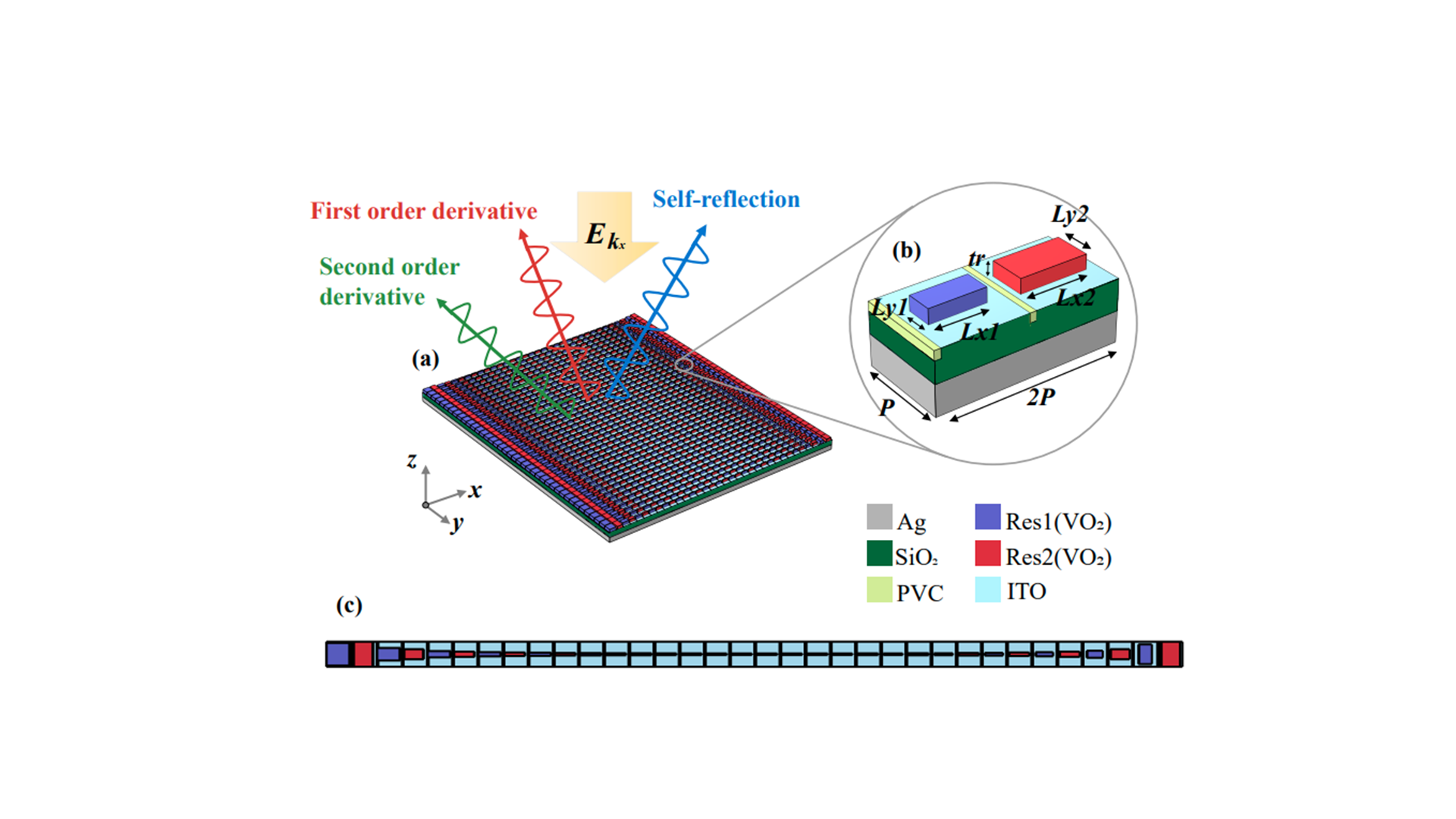
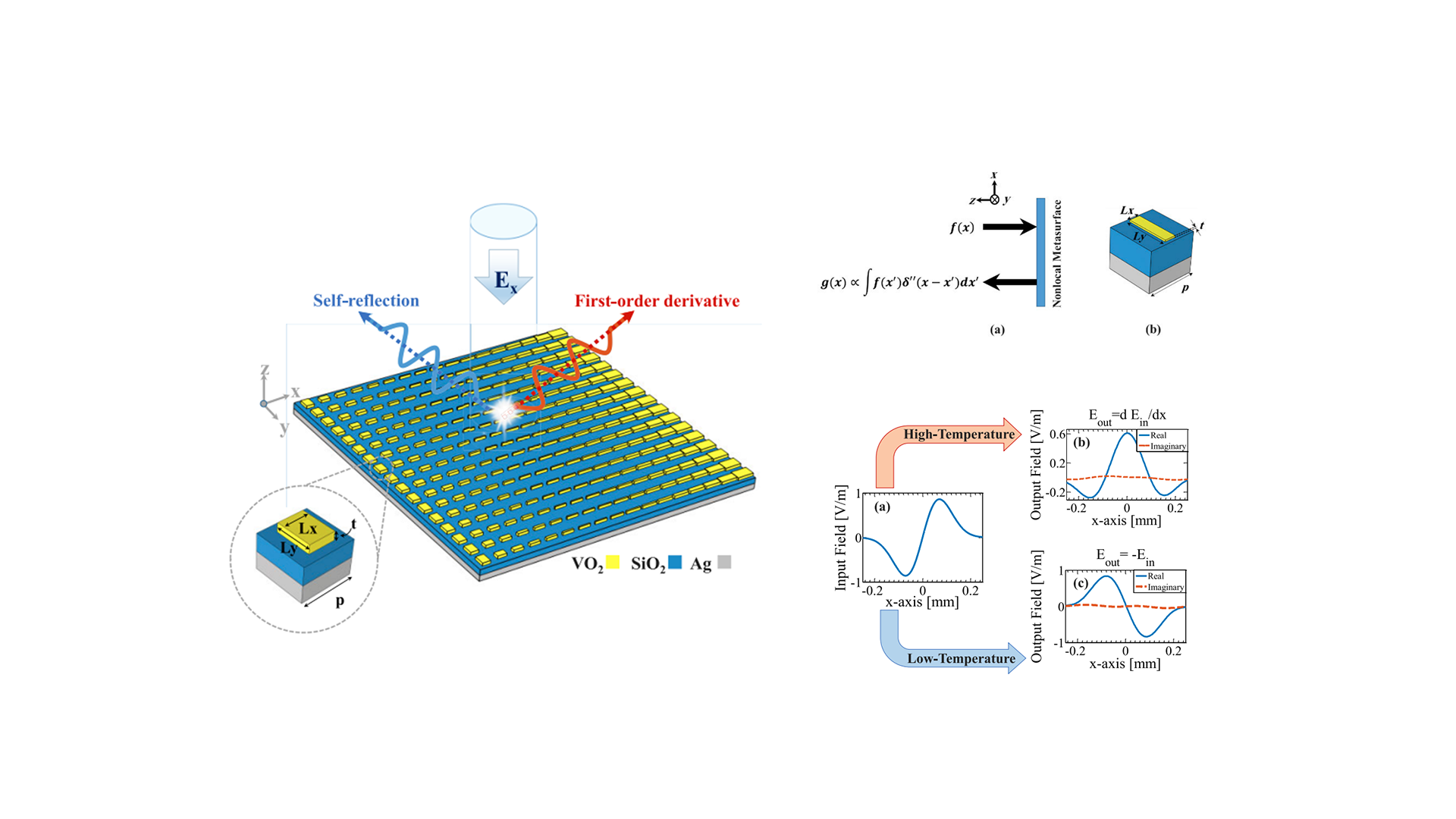
Reconfigurable multi-order differential operator in the terahertz regime based on VO2 metasurface
We design and numerically demonstrate a multifunctional reflective metasurface for analog computing in the terahertz regime using the phase-change material vanadium dioxide (VO2). The reconfigurable metasurface consists of a set of subwavelength resonators, and we thermally tune their electromagnetic response by exploiting the insulator–metal transition of VO2. By controlling the conductivity state of VO2, we reconfigure the metasurface to operate in three distinct computational modes: first spatial derivative, spatial second derivative, and mirror-like reflection without computation. We perform full-wave simulations to validate the design, analyzing both spatial and spectral reflection profiles from 2.5 to 4.75 THz, with a focus on the central frequency of 3.75 THz. The structure exhibits an effective operational bandwidth of 3.6 to 3.9 THz. The simulated reflection amplitude and phase responses closely match the …
Read full article →Jun 2026 — Journal of Optics
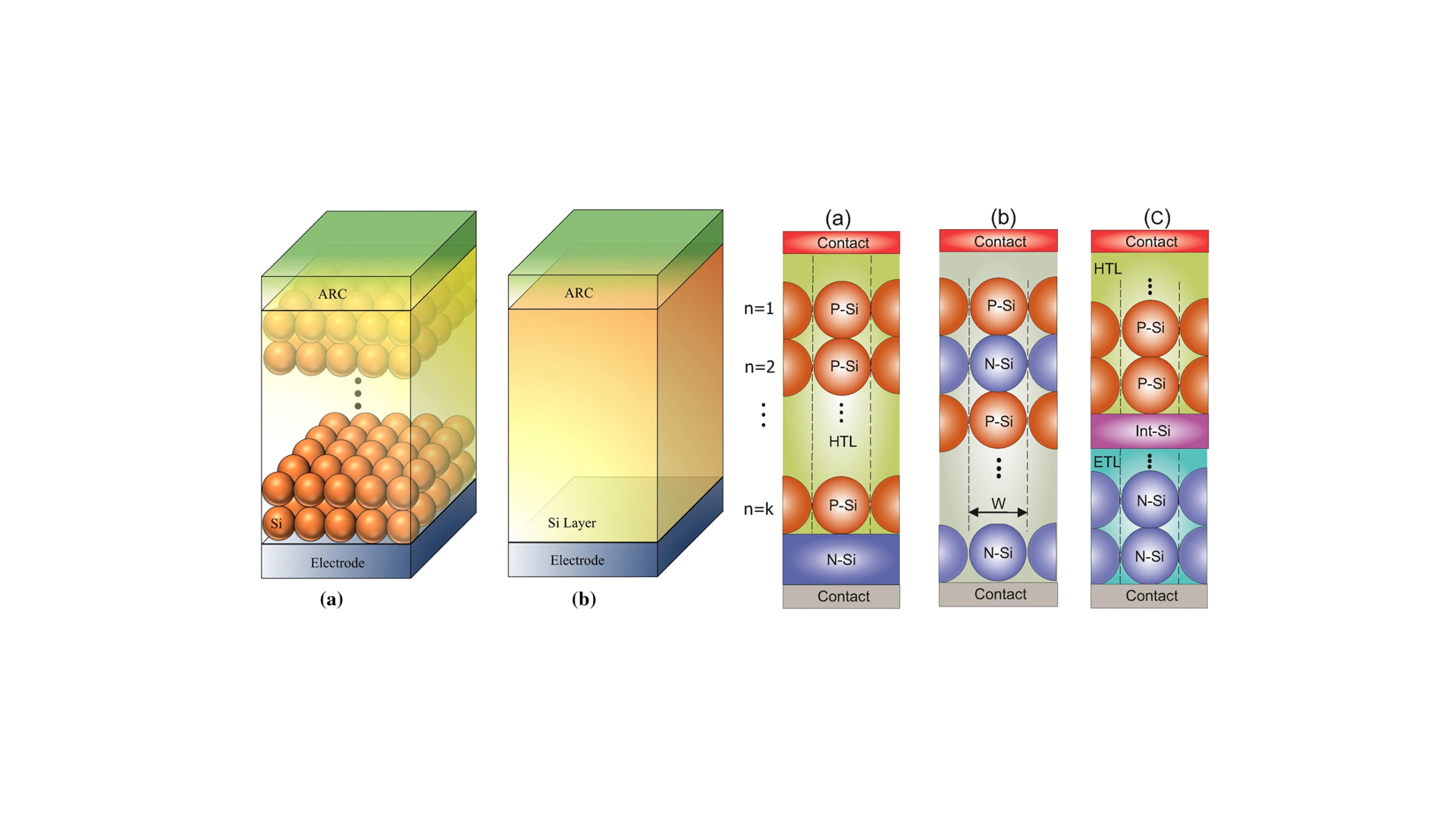
Investigation of digital metasurface geometries for enhancing the performance of ultrathin silicon solar cells
This paper presents a comprehensive investigation of digital metasurfaces for enhancing light trapping in ultra-thin crystalline silicon solar cells. Silicon nano-pixels were arranged into diverse geometries—including plus, cross, spiral, square, and fractal patterns—to exploit Mie resonances for broadband absorption enhancement. Full-wave numerical simulations identified the snowflake fractal as the most effective configuration among the designs considered. The multi-scale snowflake metasurface exhibited strong light-trapping performance across the 300–1100 nm wavelength range, achieving a photocurrent density of 13.98 mA cm−2. Electrical simulations incorporating realistic doping and recombination mechanisms further validated the device performance, yielding a short-circuit current density of 10.5 mA cm−2—representing a 4.2-fold improvement over a conventional planar solar cell lacking a digital …
Read full article →Apr 2026 — 2026 20th European Conference on Antennas and Propagation (EuCAP)
Feasibility Studies on Plasma-Based Reflective Surfaces
The numerical design of two plasma-based reflective surfaces operating in the X band is presented. One design enables beam-forming, while the other supports beam-steering. Both configurations incorporate an illuminating horn antenna. In parallel, the plasma discharges forming the reflective surfaces have been experimentally realized and characterized in terms of plasma density using a microwave interferometer. The numerical analysis explores the sensitivity of the proposed designs to variations in plasma properties and operating frequency. For instance, when operating at 8 GHz, the beam-forming capability is maintained over a bandwidth of approximately 1 GHz, with side lobe levels remaining below -7 dB. Experimental tests conducted with a geometry matching the simulated configuration confirm that the assumed plasma properties are achievable in practice, thereby supporting the feasibility to the …
Read full article →Mar 2026 — IEEE Access
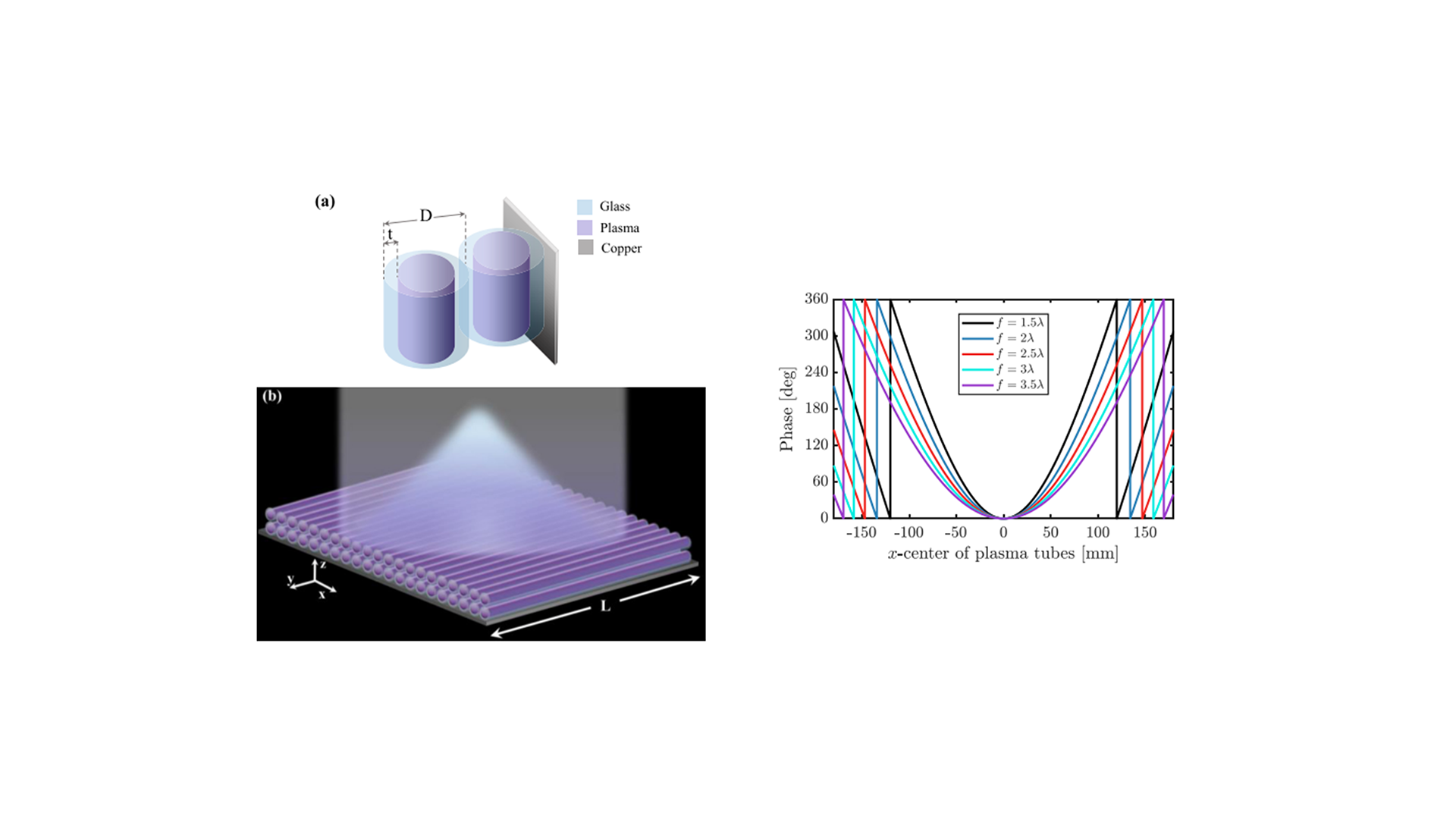
Reconfigurable Varifocal Lens Antenna Based on Plasma Technology
The growing demand for higher capacity in wireless communication networks has created a critical need for smart devices with dynamic focusing and beam steering capabilities in the 5G mid-band spectrum. Conventional focusing techniques and metasurface-based flat lenses often suffer from static operation and mechanical complexity, restricting their practical use in adaptive platforms. In this work, we propose a reconfigurable reflective lens based on plasma-filled glass tubes designed to operate at 5 GHz. Through full-wave numerical simulations, we demonstrate that selective modulation of plasma density permits continuous focal length tuning from to . Furthermore, by increasing the number of plasma tubes, we achieve dynamic lateral shifts of the focal spot exceeding . Compared with prior reconfigurable lens approaches in the microwave and millimeter-wave range, the proposed design offers a …
Read full article →Get in touch for research collaboration or more information.